Quick Answer
For most players, the safest early Camera Obscura priorities are Focus, Focal Point, and Reload Speed.
Those three upgrades do the most to reduce combat friction: better consistency, stronger high-quality shots, and less dead time between photos.
Film Capacity is a comfort pick, Clairvoyance is more situational, and niche upgrades become more valuable once you know which filter playstyle you actually like.
Best Early Upgrade Order
If you want a practical first path instead of a full theorycraft page, use this order:
- Focus
- Focal Point
- Reload Speed
- Film Capacity
- Special Shot / Willpower support
- Clairvoyance or range-based comfort upgrades
That order is not based on raw menu hype. It is based on what actually makes the remake feel smoother when fights start getting messy.
Why Focus comes first
Fatal Frame 2 Remake pushes you into fights where camera control matters more than just raw damage.
Focus is one of the cleanest upgrades because it improves shot consistency without forcing a risky playstyle.
If a fight already feels chaotic, better control is worth more than a flashy upgrade that only helps in ideal conditions.
Why Focal Point is so strong
Focal Point is one of the best damage-oriented upgrades because it directly supports higher-quality shots.
If you are already trying to line up stronger photos, this upgrade pays off immediately.
It is also a very safe investment because it helps common encounters, not just edge cases.
Why Reload Speed matters more than it sounds
Reload Speed is one of those upgrades that can look boring on paper and feel amazing in real fights.
A lot of pressure in Fatal Frame 2 Remake comes from the moments between shots:
- waiting for film to reload
- trying to buy time
- trying to recover control while enemies stay aggressive
- getting punished because your camera is not ready yet
That is why Reload Speed is often better than a more glamorous pick early on.
Best Short Version
If you only want one simple recommendation, start with Focus → Focal Point → Reload Speed.
That is the most stable early route for players who want fewer awkward fights and less wasted film.
How Camera Upgrades Work
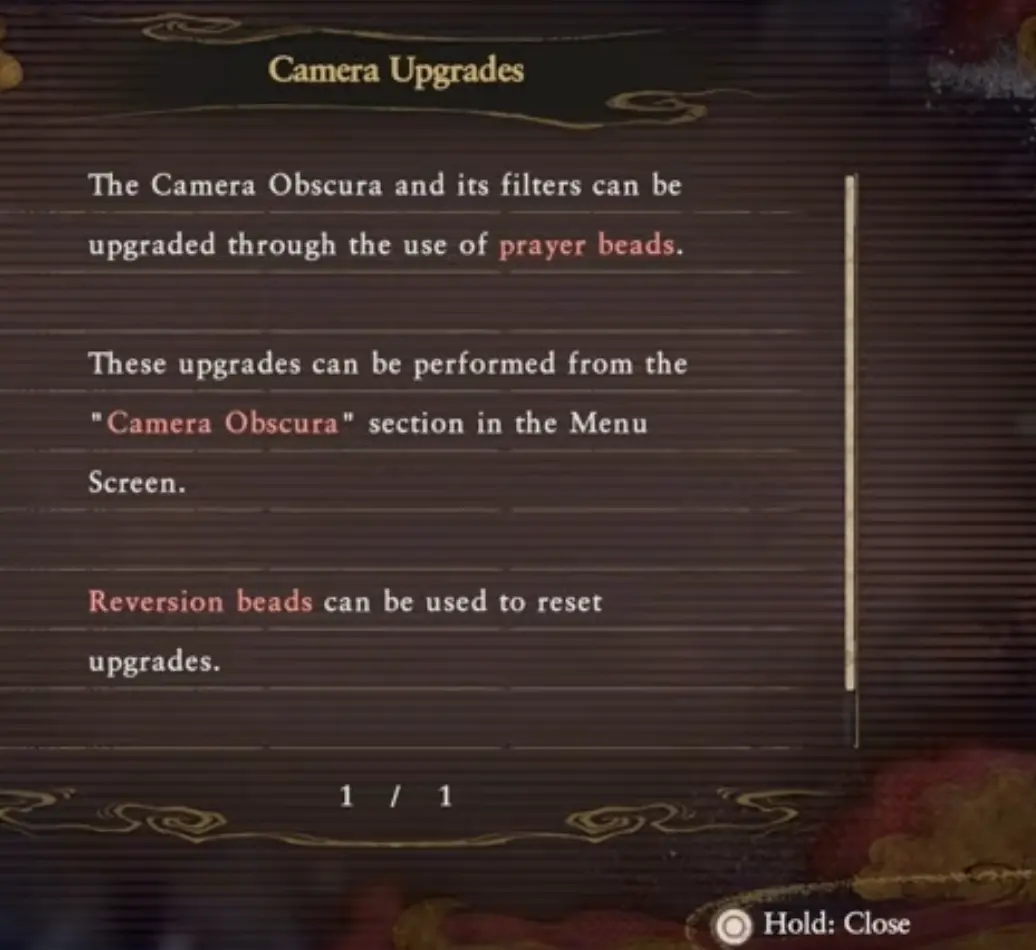
Camera Obscura upgrade menu overview.
The remake gates several important camera functions behind progression and upgrades rather than handing everything to you immediately.
That matters because a lot of early confusion comes from trying to use systems you technically do not have yet.
What upgrades unlock
The Camera Obscura upgrade menu expands the camera’s performance and unlocks new functionality over time.
The broad categories you should care about are:
- manual control improvements
- shot quality improvements
- reload / comfort upgrades
- filter and special-shot support
- utility upgrades like Clairvoyance
Upgrade resources
This page is not trying to be a full materials spreadsheet, but you should still understand the upgrade economy:
- Prayer Beads are the core upgrade currency for the camera and filters
- Spirit Orbs gate some upgrade progress
- Reversion Beads let you reset upgrades and reallocate later
That reset option matters because this is not a game where your first instincts are always right. If you overspend on a path you do not like, you are not permanently trapped.

Focus and Zoom are upgrade-gated rather than available by default.
Focus vs Zoom
This is one of the most common early questions.
Focus
Focus is the safer upgrade for almost everybody.
It helps with:
- cleaner shot setup
- stronger consistency in normal encounters
- less frustration when enemies move erratically
- better control when you are still learning the remake’s rhythm
If you do not know what to buy first, buy Focus before getting cute.
Zoom
Zoom is useful, but it is usually more situational.
It becomes more valuable when:
- you are dealing with awkward positioning
- you prefer more distance
- a fight or target forces range more than usual
- you are already comfortable with the rest of the combat loop
That means Zoom is good, but not usually your first-priority comfort upgrade.
Why Focus Wins Early
- + Helps common fights immediately
- + Improves consistency instead of only ideal shots
- + Pairs well with Focal Point and reload comfort
- + Better for players still adjusting to remake pacing
Why Zoom Usually Waits
- - More situational than Focus in early play
- - Less important if your close-range fights already feel messy
- - Usually stronger after core comfort upgrades are in place
- - Can wait unless a specific encounter is giving you range problems
The Most Important Utility Upgrades
Not every upgrade needs a full section, but a few deserve direct mention.
Reload Speed
This is the most underrated early upgrade in the game.
If the remake is frustrating you, Reload Speed is one of the first things that actually makes the moment-to-moment combat feel fairer.
Film Capacity
Film Capacity is a comfort upgrade, not usually a first-pick power upgrade.
It helps when:
- you do not want to overmanage resources
- you hate bumping into carry limits
- you prefer smoother exploration runs
- you are trying to avoid waste while still using decent film
It is useful, just not usually more important than Focus or Reload Speed.
Clairvoyance
Clairvoyance is a utility pick.
It is cool, and in some situations it can feel genuinely helpful, especially when spirits clip, shift, or pressure from awkward positions.
But it is not usually where I would put my earliest resources unless the rest of my setup already feels good.
Best Damage Upgrades vs Best Comfort Upgrades
A lot of people approach upgrades with one of two goals:
- “I want stronger photos”
- “I want fewer miserable fights”
Those are not the same thing.
Best damage-oriented picks
If your priority is stronger offense, look first at:
- Focal Point
- max attack / direct power-style upgrades
- filter or special-shot synergies after your base camera feels stable
Best comfort-oriented picks
If your priority is survival and smoother control, look first at:
- Focus
- Reload Speed
- Film Capacity
- selected Willpower support
For a first serious run, comfort usually beats greed.
Do Not Overspend On Style Picks Too Early
The remake has several upgrades that sound exciting because they feel specialized or advanced.
That does not mean they are the best early investments.
If your basic combat loop still feels unstable, upgrading around niche tricks too early can leave you weaker in the fights you actually have to survive.
How Filters Change Upgrade Priorities
Radiant Filter is short-range, but its burst damage can be a major upgrade priority shift.
This is the part a lot of generic upgrade pages skip.
The “best” upgrades are not only about the base camera. They also depend on which filter tools you actually use.
Perceptual Filter
Perceptual Filter is more about tracking hidden traces and following what the camera reveals than brute-force damage.
If you are leaning on Perceptual play, your priorities shift slightly toward:
- smoother general handling
- reliable willpower flow
- better comfort rather than raw ranged aggression
This is another reason Focus stays strong for so long.
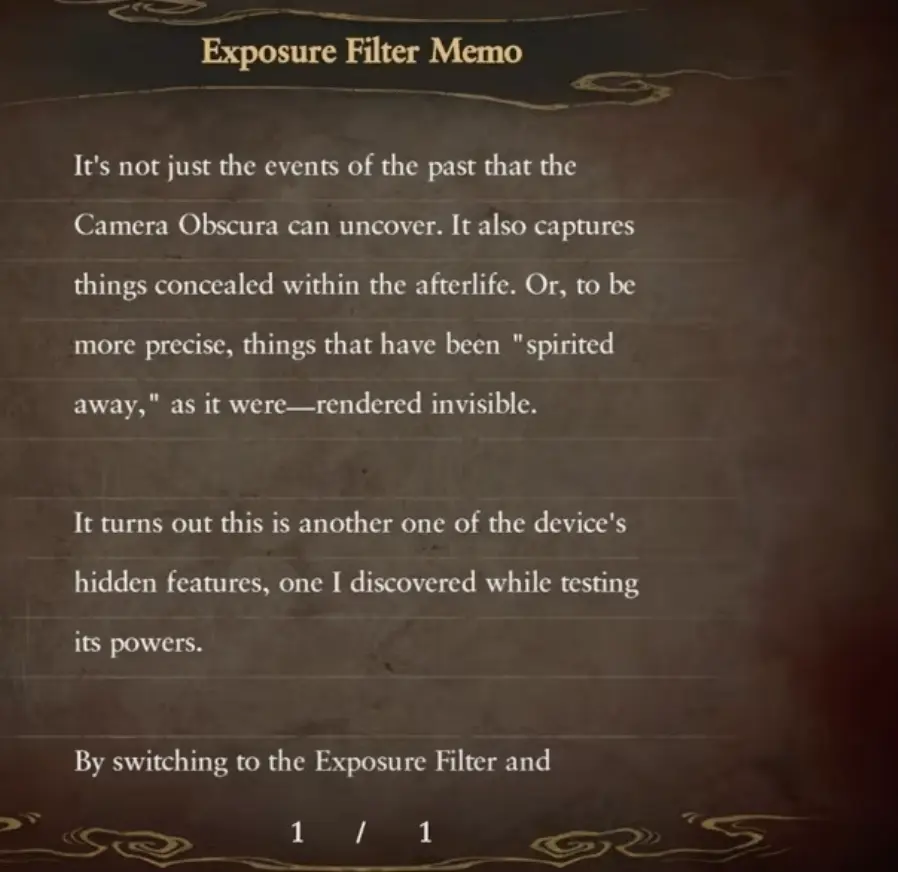
Exposure Filter
Exposure Filter is tied to returning hidden objects or paths by matching the right view and bringing concealed things back into the world.
That makes it less of a pure combat tool and more of a utility / progression system.
Because of that, Exposure synergy usually does not mean you need to rush damage upgrades first.
It means you want a camera setup that feels responsive and stable while exploring.
Radiant Filter
Radiant is where upgrade planning gets more aggressive.
Radiant has:
- short range
- strong power
- slow charge
- higher willpower pressure
- a stronger relationship with Purging-style usage
That means if you love Radiant, you should value:
- better core handling
- stronger shot quality
- enough willpower support to avoid feeling starved
- enough reload comfort that the short-range pressure does not become miserable
Radiant is powerful, but it is not a beginner “rush this first” answer.
Special Shot and Willpower Support
Special shots are only as good as your ability to actually use them without wrecking your flow.
That is why I do not recommend blindly rushing special-shot power first.
Instead, ask:
- do I have enough willpower to support this style?
- am I already comfortable with normal shot timing?
- am I getting enough value from my filter choice?
- would Focus or Reload Speed solve my real problem better?
If the answer is yes, take the stable upgrade first.
A Good Mid-Game Upgrade Path
Once your early camera feels stable, a strong next phase looks like this:
- round out Reload Speed if it still feels slow
- add Film Capacity if inventory friction is annoying
- invest in special-shot support if your preferred filter style is becoming clear
- pick up Clairvoyance if utility is starting to matter more
- use Reversion Beads if your first route no longer matches your preferred setup
That last point matters more than people think.
A reset option means your first build does not have to be perfect.
What To Upgrade First If You Hate the Combat
If your honest problem is not “damage” but “this feels annoying,” do this:
- Focus
- Reload Speed
- Focal Point
- Film Capacity
That path is less glamorous, but it is often the best route for making the remake more manageable.
What To Upgrade First If You Want Stronger Damage
If you already like the combat rhythm and mainly want more offensive payoff, do this:
- Focal Point
- Focus
- Reload Speed
- offensive or special-shot support
- range / utility depending on filter preference
You still want Focus in that path because offense is much less useful if your shots stay messy.
Final Recommendation
If I were building a single “best for most players” route for a first serious run, I would do this:
- Focus first
- Focal Point second
- Reload Speed third
- Film Capacity fourth
- then adapt based on whether I am leaning more into utility or into filter-driven offense
That gives you a camera that feels better in ordinary fights, not just in highlight moments.
Top Questions
Camera Obscura Upgrades FAQ
What is the best early upgrade in Fatal Frame 2 Remake?
For most players, Focus is the safest first upgrade because it improves shot consistency and supports the rest of the camera toolkit.
Is Reload Speed worth upgrading early?
Yes. Reload Speed is one of the most useful comfort upgrades in the remake because it reduces dead time between shots and makes messy encounters easier to control.
Should I upgrade Focus or Zoom first?
Usually Focus first. Zoom is useful, but Focus tends to improve a wider range of common fights and general camera handling.
What do Reversion Beads do?
Reversion Beads let you reset camera upgrades, which makes it easier to reallocate resources if your first build stops fitting your playstyle.
Is Film Capacity a priority upgrade?
It is a good comfort upgrade, but usually not a better first pick than Focus, Focal Point, or Reload Speed.
Does filter choice affect upgrade priority?
Yes. A more aggressive filter style, especially one that pressures willpower or short-range combat, can make handling and support upgrades more important.
Related Fatal Frame 2 Remake Guides
Film Types Guide
Best film choices, when to spend stronger film, and how reload pressure changes your resource decisions.
All Ghosts Guide
Ghost list logic, cleanup awareness, and how to plan a smoother completion run.
Endings Guide
Understand route logic, ending structure, and how to avoid wasting long runs.
Remake vs Original Differences
See what actually changed in the remake, including combat feel, balance, and side-content differences.